The Ants

Die Ameisen

Joachim Ringelnatz (1883-1934)

Die Ameisen
In Hamburg lebten zwei Ameisen, Die wollten nach Australien reisen. Bei Altona auf der Chaussee Da taten ihnen die Beine weh, Und da verzichteten sie weise Denn auf den letzten teil der Reise. ...So will man oft, und kann doch nicht,   Und leistet dann recht gern Verzicht.
The Ants
Two ants who lived in Hamburg planned a jaunt to Australia, down under. At ALTona, along the Way, their legs were playing up, so they wisely decided to abandon the final stretch that they had planned on. …Often, one can’t do what one wants,   and is quite happy to renounce.

Translation: Copyright © Timothy Adès

More poems by Joachim Ringelnatz...

The Snuffbox

Die Schnupftabakdose

Joachim Ringelnatz (1883-1934)

Die Schnupftabakdose
Es war eine Schnupftabakdose, Die hatte Friedrich der Grosse Sich selbst geschnitzelt aus Nussbaumholz. Und darauf war sie natürlich stolz. Da kam ein Holzwurm gekrochen. Der hatte Nussbaum gerochen. Die Dose erzählte ihm lang und breit Von Friedrich dem Grossen und seiner Zeit. Sie nannte den alten Fritz generös. Da aber wurde der Holzwurm nervös Und sagte, indem er zu bohren begann: "Was geht mich Friedrich der Grosse an!"
The Snuffbox
A snuffbox had at some past date Been carved by Frederick the Great, In person, out of walnut-wood, Which, in its view, was pretty good. In time, a woodworm came a-crawling, The scent of walnut strongly calling. The box harangued it, laid on thick The life and times of Frederick, And praised his generosity. The woodworm, though, got crotchety: As it began to bore, it said: ‘Why should I care about old Fred?’

Translation: Copyright © Timothy Adès

More poems by Joachim Ringelnatz...

Evening on the Shore

Abend am Strand

Joachim Ringelnatz (1883-1934)

Abend am Strand
Abendglühgold zittert auf träumender See. Eine Möwe zieht ihre einsamen Kreise. Auf dem Wasser treibend, ein Boot. Und leise, leise Bringt mir der Wind eine müde Weise. – – Närrisches Herz, was stimmt dich so weh?
Evening on the Shore
Sunset glitter on dreaming sea. Circling, circling, a lonely gull. Boat on the water. And wearily Heard on the wind, a melody. - - Foolish heart, why so sorrowful?

Translation: Copyright © Timothy Adès

More poems by Joachim Ringelnatz...

It’s Snowing

Il neige

Charles Oulmont (1883-1984)

Il neige
Il neige, il neige du chagrin… L’on dirait d’un grand rideau gris. Penses-tu donc la vie si longue Pour ne pas éloigner cette ombre ?... L’ombre augmente avecque le soir Elle se confond dans la nuit. Le gris n’est plus gris, mais tout noir, Si noir qu’on ne le sait plus gris … Et pourtant, il est là, tout près, Il guette tes soupirs, tes larmes, Il se réjouit de ta peine. Il neige, il neige du chagrin… Crois-m’en, ne le laisse pas vivre : De sa vie naîtrait ta mort. Cultive le rose ou le bleu, Clarté, sourire, amour, soleil. Ce que déteste le chagrin, Aime-le toujours plus et plus : Sournois, lâche, il reculera : Il aura peur de cette joie Et tu chanteras devant lui Sans le craindre le moins du monde, Plus de cœur en berne jamais : Du chagrin, la neige a fondu.
It’s Snowing
It’s snowing, snowing sorrow. You’d say, a great grey curtain. Do you then think life’s too long Not to repel this shadow? The shadow grows with evening, It blends into the night, Not grey now, but quite black, so black It cannot pass for grey. And yet it’s there, so close, Watching your sighs and tears, Rejoicing in your pain, It’s snowing, snowing sorrow. Trust me, don’t let it live! Its life would spawn your death. Nurture the rose, or blue Brightness, the smile, love, sun. Love that which sorrow loathes, For ever, more and more: Sullen and cowardly, it will Shrink back, scared of this joy. You’ll sing in sorrow’s face, With the least fear in the world. No heart at half-mast now! And sorrow’s snows have thawed.
Verlaine is in prison, in Mons (at first, in Brussels), for shooting Rimbaud in the wrist. Set to music by Dutilleux

Translation: Copyright © Timothy Adès

More poems by Charles Oulmont...

Gold

Gold

Joachim Ringelnatz (1883-1934)

Gold
Gold macht nicht jeden reich, Gold ist geschmeidig und weich Wie ein Lurch. Schlängelt sich zwischen den Fingern durch. Gold entrollt, von Gott gewollt. Gold soll nicht frech sein. Gold darf nicht Blech sein, Nicht durchmessingt oder durchsilbert. Gold will redlich frei sein, Ohne aufgezwungnes Beisein, Hören Sie, Gilbert? Gold macht uns trunken. Gold Stinkt als Halunkensold. Gold macht nicht gut. Gold wittert Blut. Gold macht nicht froh. Wo ist Gold? Wo? In Europa ist kein Gold mehr da. Alles Gold ist in Amerika. Doch Sie haben recht, mein lieber Mister, Deutschland nährt ein bißchen viel Minister. In den Einzelstaats-Beamtenheeren Könnte man die Hälfte gut entbehren.
Gold
Gold has a glitch: Not everyone’s rich. Malleable, bland as Soft salamanders, Liquefied ingots Slip through your fingers. Gold accomplishes What God wishes, Won’t be ill-bred, Mayn’t be of lead, Brassed, or silvered. Listen up, Gilbert! Gold wants to be Honestly free, Not to be told Where it must be. Gold gets us heavily drinking. Gold pays for villainy, stinking. Gold can’t make good. Gold smells of blood. Gold’s not good cheer. Where is it? Here? Europe? No more, Now we are poor: Only beyond, Over the pond. Though, dear American Sir, You may affirm, any Time you prefer, We have in Germany At the trough, Too many Ministers, more than enough, Statelets with armies of employees. We could dispense with half of these.
from 'Ringelnatz the Rhymer' The High Window, 2024.

Translation: Copyright © Timothy Adès

More poems by Joachim Ringelnatz...

The Postage Stamp

Der Briefmark

Joachim Ringelnatz (1883-1934)

Der Briefmark
Ein männlicher Briefmark erlebte Was Schönes, bevor er klebte. Er war von einer Prinzessin beleckt. Da war die Liebe in ihm erweckt Er wollte sie wieder küssen, Da hat er verreisen müssen. So liebte er sie vergebens. Das ist die Tragik des Lebens !
The Postage Stamp
A postage stamp, masculine, Experienced something fine Before he had to stick: Yes, a princess’s lick. Love smote him to the quick. He would have kissed her back, But must have lost the track. His love was nullified. Life has its tragic side!
https://www.youtube.com/shorts/6-WIZ_MVb9M

Translation: Copyright © Timothy Adès

More poems by Joachim Ringelnatz...

Sneaky Snake

An einem Teiche schlich eine Schleiche

Joachim Ringelnatz (1883-1934)

An einem Teiche schlich eine Schleiche
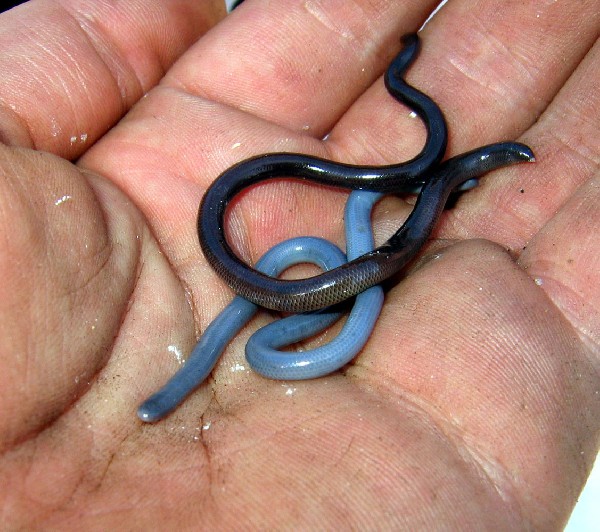
An einem Teiche Schlich eine Schleiche, Eine Blindschleiche sogar. Da trieb ein Etwas ans Ufer im Wind. Die Schleiche sah nicht was es war, Denn sie war blind. -------------------- Das dunkle Etwas aber war die Kindsleiche Einer Blindschleiche.
Sneaky Snake
At a water- hole snuck a snake, a blindsnake. What slank to the bank, wind -swept? Blindsnake saw not what crept: same kinda snake kid kith n kin done in dead blindsnake.

Translation: Copyright © Timothy Adès

More poems by Joachim Ringelnatz...

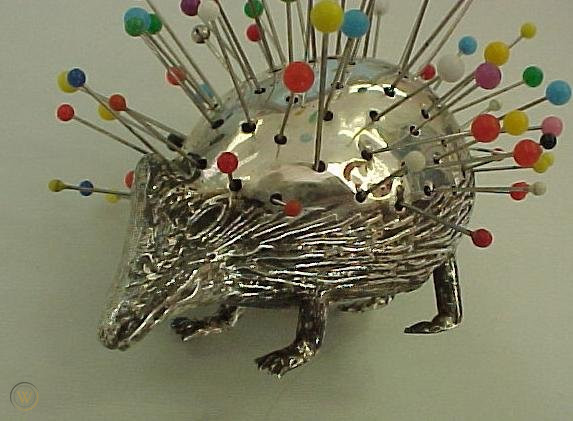
The Pincushion

Das Nadelkissen

Joachim Ringelnatz (1883-1934)

Das Nadelkissen
Das Nadelkissen bildete sich ein, Mit dem Stachelschwein Verwandt zu sein. Das Nadelkissen Ist, wie wir wissen, Eine recht nuetzliche Erscheinung. Natűrlich sind wir ganz seiner Meinung.
The Pincushion
Thinks the pincushion, I’m the hedgehog’s cousin. We know he’s of use, We go with his views.

Translation: Copyright © Timothy Adès

More poems by Joachim Ringelnatz...

Le Pont du Nord

Le Pont du Nord (as sung by Germaine Montéro)

Pierre Mac Orlan (1882-1970)

Le Pont du Nord (as sung by Germaine Montéro)
Je n’ai pas pu payer ma taule. Je dois deux semain’s et ma clé N’ouvrira plus la rue des Saules: Ainsi l’a voulu le taulier. La neige tomb’, c’est grand’ vacherie Dans l’ciel, sur la terre et sur moi. Le froid mord dans mes joues maigries Et me ronge le bout des doigts. Ma mèr’ m’a dit, il y a longtemps, — «C'est sur le Pont du Nord qu’Adèle Ta soeur aînée a foutu l'camp Pour danser la java rebelle Loin des conseils de ses parents. C’est là qu’ell’ perdit sa ceinture, La vie et l’air de la chanson. Les Rabouin’s, la Bonne Aventure, Tout ça c’est de l’accordéon.» Quand ma mère eut fermé la bouche, Mon premier soin, ru’ Durantin, Fut d’aborder une Manouche. On peut dir’ qu’elle tombait bien. Sa jupe à volants était mûre; Elle a regardé dans ma main Et m’a dit la Bonne Aventure Devant la port’ d’un marchand d’vin. —«Tu seras marié pour toujours Avant que la lune se couche Dans la lumièr’ du petit jour Tout d'suite après ta premièr’ touche: Car c’est ainsi que naît l’amour. Tu me paieras à la prochaine… Es-tu rassuré’ sur ton sort ? Il est au bout du Pont des Peines, Autrement dit le Pont du Nord. » — «Monsieur, demandai-je à tout l'monde, Où se trouve le Pont du Nord?» Les uns disaient: Au bout du monde Et d’autres: Au bout du corridor. Dans les neiges indifférentes J’ai aperçu le pont brumeux. Il n’avait pas de main-courante Et frôlait le fleuve et les cieux. Le vent, tel un homme en folie, Bouscula les points cardinaux; Et la neige fondit en pluie Pour mieux vous refroidir les os. Et la chair promise au tombeau La fille aperçut-elle un signe Qui lui fit entrevoir les corps Des mal marié's à la dérive ?… Ce n'est plus de notre ressort.
Le Pont du Nord
Can’t pay my rent. Two weeks behind. My key won’t open Rue des Saules: The landlord’s wish, he isn’t kind. It’s snowing, snowing wretchedly On earth, on heaven, and on me. On my thin cheeks the snowflakes fall: The cold bites into them, and nips And gnaws my frozen finger-tips. My mother told me long ago ‘Le Pont du Nord is where Adèle, Your elder sister, went awol And whooped it up, a ne’er-do-well, Far from her parents’ good advice. She lost her belt, she lost the tune, Her life and luck and good fortune: Drop-outs and chancers, no-one nice, Sad song, cheap music, rotten show.’ Soon as my mam had turned it up, My first requirement was to step To Gypsy Rose, rue Durantin, A palmist, doing rather well: The skirts she wore were flounced and full. She read my hand, my fate and all My future and my fortune in The doorway of a bottle-shop. 'Before the setting of the moon You shall be wed for ever more At the first light of early dawn, As soon as you’ve embarked on your… For that’s the way that love is born. Pay me next time. I reassure My clients: all you hear is gain. You’ll need to cross the Bridge of Pain That’s also called Le Pont du Nord.’ I asked if anyone could say Where I might find the Pont du Nord. Some said: it’s half the world away, Some said: it’s down the corridor. The snow just fell without a thought. I saw the bridge in misty guise: No handrail, no police report, It skimmed the river and the skies. The wind was like a man insane: The compass-points were all assailed. The snow was melting into rain, By which your bones are truly chilled. The flesh is promised to the tomb. Did the girl see by any chance A sign that let her glimpse the doom Of brides in sad mésalliance? That’s now beyond our competence.
Published in Journal of the London Institute of Pataphysics, 2020.

Translation: Copyright © Timothy Adès

More poems by Pierre Mac Orlan...

Mary-Sue

Marie-Dominique

Pierre Mac Orlan (1882-1970)

Sung by Laure Diana
Marie-Dominique
J'étais un soldat de marine, J'venais d'm'engager pour cinq ans. J'avais vingt ans, belle poitrine Comm' dans l'refrain du régiment. Dans les bistrots près de Lourcine, Les anciens m'en faisaient un plat: - «Tu verras c'que c'est qu'l'Indochine. Écout' la chanson d'un soldat»: Refrain Marie, Marie-Dominique Que foutais-tu à Saïgon? Ça ne pouvait rien fair' de bon Marie-Dominique. Je n'étais qu'un cabot-clairon Mais je me rappelle ton nom Marie-Dominique. Est-ce l'écho de tes prénoms Ou le triste appel du clairon Marie-Dominique. Je ne savais pas que la chance Ne fréquentait point les cagnas Et qu'en dehors de la cuistance Tout le rest' ne valait pas ça. Tu m'as fait comprendre les choses Avec tes p'tits airs insolents Et je n'sais quell's apothéoses! C'était l'plus clair de mes tourments Ce fut Marie-la-Tonkinoise Qui voulut fair’ notre bonheur En m’faisant passer sous la toise Dans l’vieux Cholon… ou bien ailleurs. T’as toujours été un peu folle. Ton but, je le voyais pas bien. Tout ça ce n’était qu’des paroles Au cours de la piastre à Nankin. Tu m’as gâté mon paysage Et l’av’nir quand sur le transport Je feuilletais des bell’s images Peintes comm’des Boudda en or. Où sont mes buffl’s dans la rizière, Les sampangs, l’aroyo brumeux, Les congay’s, leurs petit’s manières, Devant le pouvoir de tes yeux ? C’est ta démarche balancée Qui effaça tous mes espoirs, Dans la bonn’ vi’ si bien rêvée Est-c’ régulier de t’en vouloir? Un’ chanson de la Coloniale C’est le résultat en cinq ans De mes erreurs sentimentales Selon l’expérience des camps. De : Chansons pour accordéon, 1953.
Mary-Sue
I was a soldier, a Marine, At twenty, for five years I signed. My chest was something to be seen, As regimental songs remind. In bistros near the barrack gate The old hands piled it on my plate: ‘Now hear this song of the Marines! You’ll see what Indo-China means.’ Chorus Tonkin Mary, Saigon Sue, What was it you used to do? Nothing nice or good at all. Tonkin Mary, Saigon Sue, I was just a bugler, true, That's how I remember you, Tonkin Mary, Saigon Sue, By your forenames’ dying fall, Or the dreary bugle-call, Tonkin Mary, Saigon Sue. I had not the least idea Hangars aren’t the haunts of Luck. All that counts is how you cook, The rest is neither here nor there. All your petty insolence Gave me quite a grasp of things: There were some divine ascents, Surest of my sufferings. It was Tonkin Mary who Wished our fortune and our pleasure. In Cholon she took my measure, And some other places too. Just a wee bit cracked are you, What you planned I hardly knew. All that empty chattering! Money-changers of Nanking. You spoilt my pretty country scene, My future too, when on the road I painted lovely images, All done, as Buddhas are, in gold. My paddy-field with buffaloes, My misty canyon, my sampans, My Cong, and all their little ways: Doomed, by the power of your eyes! Your well-considered stratagem: My hopes erased and washed away. In the good life, the happy dream, To hold a grudge must be OK. Five years of service! That is all, After my blunders in romance: A song of La Coloniale To show for my experience.
Journal of The London Institute of Pataphysics, 1921.

Translation: Copyright © Timothy Adès

More poems by Pierre Mac Orlan...