The Old Violin

Το Παλιό Βιολί

John Polémis (1862-1925)

Το Παλιό Βιολί
Άκουσε τ’ απόκοσμο, το παλιό βιολί μέσα στή νυχτερινή σιγαλιά τού Απρίλη· στό παλιό κουφάρι του μιά ψυχή λαλεί μέ τ’ αχνά κι απάρθενα τής αγάπης χείλη. Καί τ’ αηδόνι τ’ άγρυπνο καί το ζηλευτό ζήλεψε κι εσώπασε κι έσκυψε κι εστάθη, γιά νά δή περήφανο τί πουλί είν’ αυτό πού τά λέει γλυκύτερα τής καρδιάς τά πάθη. Ως κι ο γκιώνης τ’ άχαρο, τό δειλό πουλί, μέ λαχταρ´’ απόκρυφη τά φτερά τινάζει καί σωπαίνει ακούοντας τό παλιό βιολί, γιά να μάθη ο δύστυχος, πώς ν’ αναστενάζη. Τί κι άν τρώη τό ξύλο του τό σαράκι; τί κι άν περνούν αγύριστοι χρόνοι κι άλλοι χρόνοι; Πιό γλυκιά καί πιό όμορφη καί πιό δυνατή η φωνή του γίνεται, όσο αυτό παλιώνει. Είμ’ εγώ τ’ απόκοσμο, τό παλιό βιολί μέσα στή νυχτερινή σιγαλιά τού Απρίλη· στό παλιό κουφάρι μου μιά ψυχή λαλεί μέ τής πρώτης νιότης μου τά δροσάτα χείλη. Τί κι άν τρώη τά σπλάχνα μου τό σαράκι; τί κι άν βαδίζω αγύριστα χρόνο μέ τό χρόνο; Πιό γλυκιά καί πιό όμορφη καί πιό δυνατή γίνεται η αγάπη μου, όσο εγώ παλιώνω.
The Old Violin
Hark to the lonely, the old violin, deep in the April night, silent, unmoving: hark to the soul in its old body, speaking with the pale lips and the pure lips of loving. Even the nightingale, wakeful, acclaimed, stopped and fell silent and looked down with wonder, stooping to see which the songbird might be that sang the heart’s sorrows more sweetly than she. Even the screech-owl, the base bird, the graceless, flutters her wings with a deep-hidden yearning, harks to the old violin, mutely learning how to cry woe, so distressful is she. What if its wood be the food of the worm? Still growing older, as years are departing, year after year that shall never return, sweeter, more beautiful, stronger its singing. I am the lonely, the old violin, deep in the April night, silent, unmoving: hark to the soul in my old body, speaking with the fresh lips of my springtime of living. What if my flesh be the food of the worm? year after year on my course I shall move, still growing older, and never return; sweeter, more beautiful, stronger my love.
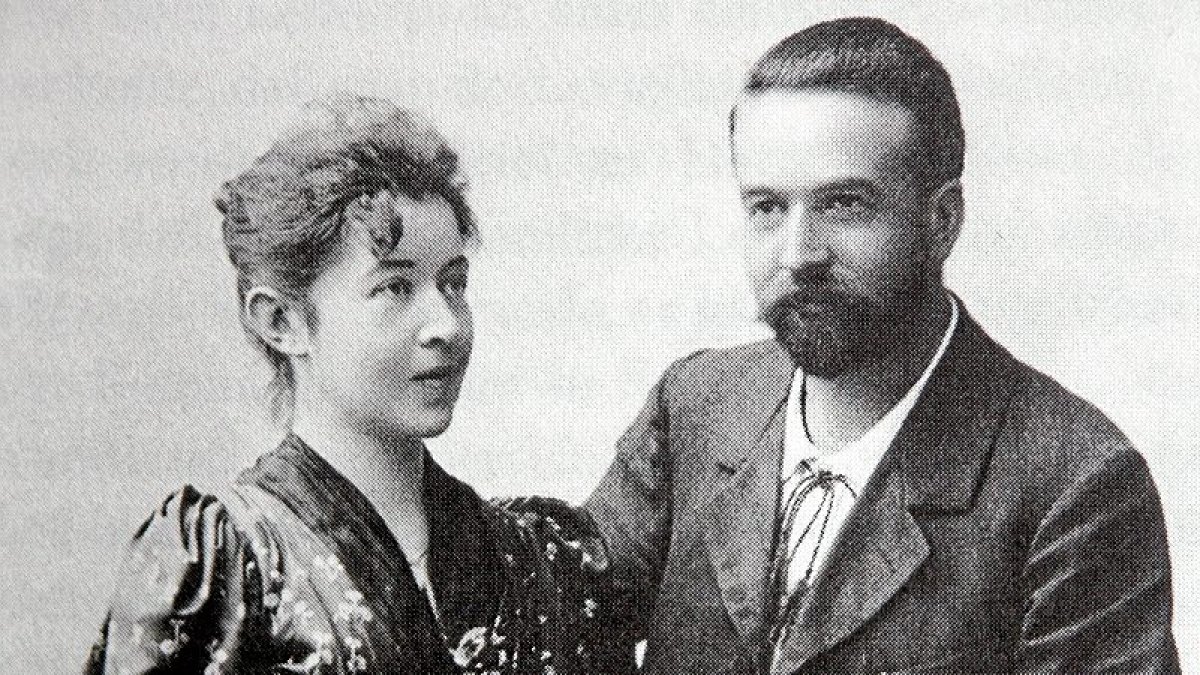
Published in ‘In Other Words’ magazine and in Morning Star

Translation: Copyright © Timothy Adès

More poems by John Polémis...

The Bean

La fève

Maurice Donnay (1859-1945)

On Twelfth Night, the French enjoy 'la galette des Rois', a flat cake of almond paste (frangipane) containing a 'bean'. The person who gets the bean wears the crown.
La fève
Tu nous dindonneras encor plus d'une fois, Chère âme, et près des tiens nos moyens sont infimes. Je me souviens toujours d'un dîner que nous fîmes, Un beau soir, dans Auteuil, à la porte du Bois Et tu faisais de l'œil à ton voisin de face, Et tu faisais du pied à tes deux amoureux A gauche, à droite, et ton amant était heureux, Car tu lui souriais tout de même avec grâce. Ah ! tu n'es pas la femme aux sentiments étroits Qu'une fidélité trop exclusive gêne. Entre tous, Pierre, Jean, Jacques, Alphonse, Eugène, Tu partages ton cœur comme un gâteau des Rois. Et, si grand est ton art, aimable fille d’Ève, Que chacun se croit seul à posséder la fève.
The Bean
You’ll stitch us up again, and more than once, Dear soul: compared to you, we haven’t got the means. I can’t forget that dinner one fine night: we were Out in Auteuil, just where you get into the Bois. To the sitting-opposite guy, you gave the eye, Played footy-foot with the two who fancied you, To left and right; your lover was in clover, As you anyway gave him a smile with lovely style. You’re not a woman prone to narrow sentiments, Whom high fidelity might inconvenience. Between all these, John, Peter, James, Eugene, Alphonse, You share your heart out like a Twelfth Night frangipane. And so great is your art, delightful feminine, That each one thinks himself sole owner of the bean.

Translation: Copyright © Timothy Adès

More poems by Maurice Donnay...

For a Menu

Para un menú

Manuel Gutiérrez Nájera (1859-95)

Para un menú
Las novias pasadas son copas vacías; en ellas pusimos un poco de amor; el néctar tomamos... huyeron los días... ¡Traed otras copas con nuevo licor! Champán son las rubias de cutis de azalia; Borgoña los labios de vivo carmín; los ojos obscuros son vino de Italia, los verdes y claros son vino del Rhin. Las bocas de grana son húmedas fresas; las negras pupilas escancian café; son ojos azules las llamas traviesas, que trémulas corren como almas del té. La copa se apura, la dicha se agota; de un sorbo tomamos mujer y licor... Dejemos las copas... ¡Si queda una gota, que beba el lacayo las heces de amor!
For a Menu
Each lass in our past is one more empty glass: We poured in a measure of love; We drain down the nectar, we let the days pass... Bring on others! New savours we’ll prove. Champagne are the blondes of azalea sheen, Crimson lips are a Burgundy wine; Dark eyes are Italian, grand Hippocrene, Pale green are the taste of the Rhine. Red mouths are fresh strawberries; coffee conspires From eyes black as night to flow free; Blue eyes are the wayward, the frolicsome fires, The shimmering spirit of tea. The goblet runs dry and good fortune runs down. Wine and women! One draught is enough. Farewell to our cups! Should a droplet remain, Leave to lackeys the leavings of love!
https://www.youtube.com/watch?v=B0n0jEhp4JI https://www.youtube.com/watch?v=EIW_2Oe6m0Y

Translation: Copyright © Timothy Adès

More poems by Manuel Gutiérrez Nájera...

Amorous Lament

Complainte amoureuse

Alphonse Allais (1854-1905)

Complainte amoureuse
Oui, dès l'instant que je vous vis, Beauté féroce, vous me plûtes ; De l'amour qu'en vos yeux je pris, Sur-le-champ vous vous aperçûtes ; Mais de quel air froid vous reçûtes Tous les soins que pour vous je pris ! Combien de soupirs je rendis ! De quelle cruauté vous fûtes ! Et quel profond dédain vous eûtes Pour les vœux que je vous offris ! En vain je priai, je gémis : Dans votre dureté vous sûtes Mépriser tout ce que je fis. Même un jour je vous écrivis Un billet tendre que vous lûtes, Et je ne sais comment vous pûtes De sang-froid voir ce que j'y mis. Ah! fallait-il que je vous visse, Fallait-il que vous me plussiez, Qu'ingénument je vous le disse, Qu'avec orgueil vous vous tussiez ! Fallait-il que je vous aimasse, Que vous me désespérassiez, Et qu'en vain je m'opiniâtrasse, Et que je vous idolâtrasse Pour que vous m'assassinassiez !
Amorous Lament
Yes, soon as on you I set eyes You pleased me, savage beauty, you: The love I garnered in your eyes You spotted it at once, but you Were cold and slow to recognise The lengths to which I went for you; I sighed for you such crowds of sighs! What cruelty accrued from you! How utterly you could despise The promises I made to you! In vain my groans and pleas and cries, In your hard-heartedness you knew How to disdain my enterprise. Even one day I wrote to you Such tender words as get replies: I don’t know how you managed to Peruse and yet not sympathise. It chanced that I clapped eyes on you, That you were pleasing to my eyes, Which fondly I revealed to you; You were too vain to vocalise. I chanced to fall in love with you! Despised, despairing, desperate, I hopelessly hypothesise: Quite uselessly I idolise One seeking to assassinate!
Said at Chichester, June 2026. - It seems the poem appeared in 1867, so it may not be by A.A.

Translation: Copyright © Timothy Adès

More poems by Alphonse Allais...

My Familiar Dream

Mon rêve familier

Paul Verlaine (1844-96)

Mon rêve familier
Je fais souvent ce rêve étrange et pénétrant D'une femme inconnue, et que j'aime, et qui m'aime Et qui n'est, chaque fois, ni tout à fait la même Ni tout à fait une autre, et m'aime et me comprend. Car elle me comprend, et mon coeur, transparent Pour elle seule, hélas ! cesse d'être un problème Pour elle seule, et les moiteurs de mon front blême, Elle seule les sait rafraîchir, en pleurant. Est-elle brune, blonde ou rousse ? - Je l'ignore. Son nom ? Je me souviens qu'il est doux et sonore Comme ceux des aimés que la Vie exila. Son regard est pareil au regard des statues, Et, pour sa voix, lointaine, et calme, et grave, elle a L'inflexion des voix chères qui se sont tues.
My Familiar Dream
I often have this strange and striking dream: Some woman, whom I love, and who loves me; Loves me and understands; not utterly Different each time, not utterly the same. She understands me, she alone, and clears My clouded heart, uncomplicated now For her alone; my damp and pallid brow She, she alone, can freshen, with her tears. Her hair: brown, blonde or auburn? I don’t know. Her name resembles music sweet and low, Like names of loved ones Life has sent away; Her gaze is like a statue’s, and her tone Of voice is distant, calm, and grave: you’d say, Like those dear voices that are hushed and gone.
Published 2013 in Cantalao 1.1, a magazine devoted to Neruda, who took the name Pablo, probably for Verlaine

Translation: Copyright © Timothy Adès

More poems by Paul Verlaine...

Green

Green

Paul Verlaine (1844-96)

After deserting his wife for Rimbaud, wounding Rimbaud, released from prison: he writes to his wife...
Green
Voici des fruits, des fleurs, des feuilles et des branches Et puis voici mon coeur qui ne bat que pour vous. Ne le déchirez pas avec vos deux mains blanches Et qu'à vos yeux si beaux l'humble présent soit doux. J'arrive tout couvert encore de rosée Que le vent du matin vient glacer à mon front. Souffrez que ma fatigue à vos pieds reposée Rêve des chers instants qui la délasseront. Sur votre jeune sein laissez rouler ma tête Toute sonore encore de vos derniers baisers ; Laissez-la s'apaiser de la bonne tempête, Et que je dorme un peu puisque vous reposez.
Green
Here are fruits and flowers, here are leaves and fronds And here is my heart, only you can make it beat. Don’t tear it to pieces with your two white hands! To your beautiful eyes may this humble gift be sweet. I come before you still all covered with dew That was frozen on my brow by the morning breeze. I lay my fatigue at your feet, in the hope that you Will permit it to dream of imminent remedies. Allow my head to loll on your youthful breast, Still ringing with your kisses when they are strewn; Let it find peace when the pleasant storm is done, Let me sleep awhile, for you will be taking your rest.
Copyright © Timothy Adès Debussy, Hahn, Fauré : Teresa Stich-Randall, soprane: https://www.youtube.com/watch?v=CqFhD9vuZQA Fauré : Gérard Souzay : https://www.youtube.com/watch?v=ZDzdzjIFiqg Léo Ferré : https://www.youtube.com/watch?v=biy9NwOzz64 Julos Beaucarne : http://mimiclectik.canalblog.com/archives/2018/02/14/36117763.html

Translation: Copyright © Timothy Adès

More poems by Paul Verlaine...

The Secret

Le Secret

Armand Silvestre (1837-1901)

An ‘X’ (a graduate of the École Polytechnique), he was an Inspector of Finances, one of the highest officials in France. His drama Henry VIII was set to music by Saint–Saens, and a sacred stage work was set by Gounod. He wrote five illustrated volumes on the nude in art. Set to music by Fauré.
Le Secret
Je veux que le matin l'ignore Le nom que j'ai dit à la nuit, Et qu'au vent de l'aube, sans bruit, Comme une larme il s'évapore. Je veux que le jour le proclame L'amour qu'au matin j'ai caché, Et, sur mon coeur ouvert penché, Comme un grain d'encens il l'enflamme. Je veux que le couchant l'oublie Le secret que j'ai dit au jour, Et l'emporte, avec mon amour, Aux plis de sa robe pâlie!
The Secret
O may the morn never know it, the name that I spoke to the night: may it vanish mute as a tear-drop on the breeze of the early light. O may the noonday proclaim it, the love that I hid from the morn: may it light on my heart, laid open; may my heart like an incense burn. O may dusk forget my secret, forget what I told to the day: in its robe’s pale folds may it carry my love and my secret away.
Published in AGENDA Poetry & Opera 2014

Translation: Copyright © Timothy Adès

More poems by Armand Silvestre...

My Hound

Mein Hund

Friederike Kempner (1836-1904)

Mein Hund
In den Augen meines Hundes liegt mein ganzes Glück, all mein Inneres, Krankes, Wundes heilt in seinem Blick.
My Hound
In the eyes of my hound are my joy and romance: deep sickness and wound are healed by her glance.

Translation: Copyright © Timothy Adès

More poems by Friederike Kempner...

On Marriage

Ehespruch

Emanuel Geibel (1815-84)

Ehespruch
Das ist die rechte Ehe, wo zweie sind gemeint, durch alles Glück und Wehe zu pilgern treu vereint. Der eine Stab des andern, und liebe Last zugleich, gemeinsam Rast und Wandern, und Ziel das Himmelreich.
On Marriage
That is a proper marriage Where two are of one mind, Through all the joys and sorrows As pilgrims true combined. Each is the staff of the other, Each is the cherished load: They rest and range together, Set fair on heaven’s road.

Translation: Copyright © Timothy Adès

More poems by Emanuel Geibel...

Chinoiserie

Categories
French

Chinoiserie

THÉOPHILE GAUTIER (1811-72)

Ce n’est pas vous, non, madame, que j’aime, Ni vous non plus, Juliette, ni vous, Ophélia, ni Béatrix, ni même Laure la blonde, avec ses grands yeux doux. Celle que j’aime, à présent, est en Chine ; Elle demeure, avec ses vieux parents, Dans une tour de porcelaine fine, Au fleuve jaune, où sont les cormorans ; Elle a des yeux retroussés vers les tempes, Un pied petit, à tenir dans la main, Le teint plus clair que le cuivre des lampes, Les ongles longs et rougis de carmin ; Par son treillis elle passe sa tête, Que l’hirondelle, en volant, vient toucher, Et, chaque soir, aussi bien qu’un poète, Chante le saule et la fleur du pêcher.
Chinoiserie
Madam, you’re not my love, and nor are you, Beatrice, nor you, Juliette, nor you, Ophelia; nor yet, with her great, soft eyes, golden Laura. In China at this very hour, seeing her parents, is my lover, in a fine porcelain china tower, with cormorants, on the Yellow River. Eyes at the temples gathered in; long finger-nails, emblazoned gules; paler than lamps of brass, her skin; feet, in my safe hands, minuscule. Out through the lattice comes her face, brushed on the wing by veering swallow. Each evening she with poet’s grace sings the peach-blossom and the willow.

Translation: Copyright © Timothy Adès

More poems by THÉOPHILE GAUTIER...