Ambitious Dreams

RÊVES AMBITIEUX

Joséphin Soulary (1815 –-91)

RÊVES AMBITIEUX
    Si j'avais un arpent de sol, mont, val ou plaine, Avec un filet d'eau, torrent, source ou ruisseau, J'y planterais un arbre, olivier, saule ou frêne, J'y bâtirais un toit, chaume, tuile ou roseau.     Sur mon arbre, un doux nid, gramen, duvet ou laine, Retiendrait un chanteur, pinson, merle ou moineau; Sous mon toit, un doux lit, hamac, natte ou berceau, Retiendrait une enfant, blonde, brune ou châtaine.     Je ne veux qu'un arpent; pour le mesurer mieux, Je dirais à l'enfant la plus belle à mes yeux: "Tiens-toi debout devant le soleil qui se lève;     Aussi loin que ton ombre ira sur le gazon, Aussi loin je m'en vais tracer mon horizon." Tout bonheur que la main n'atteint pas n'est qu'un rêve.
Ambitious Dreams
    Had I a plot of land, hill, dale or lea, with any trickle, torrent, spring, or brook, I'd plant an olive, ash, or willow tree, and build a thatched, or tiled, or reeded, nook.     Snug in my tree, in grass or wool or down, a bird would nest, cock-sparrow, finch, or black; snug in my nook, in cradle, cot, or sack, a child would rest, fair, dark, or chestnut-brown.     I ask a plot, no more: which measuring, I'd say: "Stand forth," to one most pretty thing, "against the rising sun, and cast your shade     upon the greensward. Where that shade may end, so far shall I my boundaries extend." Joys that we cannot reach are dreams that fade.
[video width="720" height="480" m4v="https://timothyades.com/wp-content/uploads/sites/27/2021/05/AdesXuZhimoRecital.m4v"][/video] The Sixth Cambridge Xu Zhimo Poetry and Art Festival

Translation: Copyright © Timothy Adès

More poems by Joséphin Soulary...

On Marriage

Ehespruch

Emanuel Geibel (1815-84)

Ehespruch
Das ist die rechte Ehe, wo zweie sind gemeint, durch alles Glück und Wehe zu pilgern treu vereint. Der eine Stab des andern, und liebe Last zugleich, gemeinsam Rast und Wandern, und Ziel das Himmelreich.
On Marriage
That is a proper marriage Where two are of one mind, Through all the joys and sorrows As pilgrims true combined. Each is the staff of the other, Each is the cherished load: They rest and range together, Set fair on heaven’s road.

Translation: Copyright © Timothy Adès

More poems by Emanuel Geibel...

The Lost Leader

The Lost Leader

Robert Browning (1812-89)

Just for a Handful – a Lipogram, in which Browning damns Wordsworth for kowtowing to Victoria, to braid his brow with bardic bays.
The Lost Leader
Just for a handful of silver he left us, Just for a riband to stick in his coat— Found the one gift of which fortune bereft us, Lost all the others she lets us devote; They, with the gold to give, doled him out silver, So much was theirs who so little allowed: How all our copper had gone for his service! Rags—were they purple, his heart had been proud! We that had loved him so, followed him, honoured him, Lived in his mild and magnificent eye, Learned his great language, caught his clear accents, Made him our pattern to live and to die! Shakespeare was of us, Milton was for us, Burns, Shelley, were with us,—they watch from their graves! He alone breaks from the van and the freemen, —He alone sinks to the rear and the slaves! We shall march prospering,—not thro' his presence; Songs may inspirit us,—not from his lyre; Deeds will be done,—while he boasts his quiescence, Still bidding crouch whom the rest bade aspire: Blot out his name, then, record one lost soul more, One task more declined, one more footpath untrod, One more devils'-triumph and sorrow for angels, One wrong more to man, one more insult to God! Life's night begins: let him never come back to us! There would be doubt, hesitation and pain, Forced praise on our part—the glimmer of twilight, Never glad confident morning again! Best fight on well, for we taught him—strike gallantly, Menace our heart ere we master his own; Then let him receive the new knowledge and wait us, Pardoned in heaven, the first by the throne!
The Lost Leader
Just for a handful of Wonga, that sold us, Just for a ribbon to stick in his coat, Found just that gift of which Luck hadn’t told us, Lost gift on gift, and was bought with a groat! Gold was for giving, but how parsimonious, Stinting of Wonga, what skinflints at court! All our small coins in position to pay him, Rags of dishonour, wrong colour, wrong sort! All of us, fans of his, following, honouring, Living in sight of his glory, oh my, Words to absorb, lucid phrasing to latch upon, Took him as our prototypical guy! Stratford-on-Avon and Milton both fought for us, Burns and Alastor, all watching from tomb: Only Will Wordsworth abandons, is nought for us, Sinks to our back-guard, a flunky of doom! Onward and upward! but not by his succour; Songs will inspirit us, — not by his chords; Actions will flourish, but not from this Makar: ‘Crouch’, and not ‘Climb’: such discouraging words! Blot out his monica, list a lost soul, and Log tasks unwrought and a footpath untrod: Joy diabolical, spirit-birds’ sorrow, A wrong to mankind and an insult to God! Night falls upon us, and nobody wants him: Doubt and hiatus, confusion and pain: Struggling for plaudits in shadowy twilight, No happy hoping, no morning again. Just fighting on, as was taught him: ‘Our jugular! Go for it now. You shall know our command.’ Finally Wordsworth will twig and await us, Girt with God’s pardon, upon His right hand!

Translation: Copyright © Timothy Adès

More poems by Robert Browning...

Lyra Limerica

Limericks

Edward Lear (1812-88)

Limericks
BIRDS IN THE BEARD (published in CA News, December 2004) There was an Old Man with a beard, Who said, 'It is just as I feared! Two Owls and a Hen, Four Larks and a Wren, Have all built their nests in my beard!' CAPRICIOUS CAPERS published in CA News There was an Old Person of Ischia, Whose conduct grew friskier and friskier; He danced hornpipes and jigs, And ate thousands of figs, That lively Old Person of Ischia. DEFLATED published in CA News, said at Horatian Society There was an Old Man in a boat, Who said ‘I’m afloat! I’m afloat!’ When they said ‘No! you ain’t!’ He was ready to faint, That unhappy Old Man in a boat. TERRA FIRMA published in CA News There was a Young Lady of Portugal, Whose ideas were excessively nautical: She climbed up a tree, to examine the sea, But declared she would never leave Portugal. SHOE SHOCK Said at Horatian Society dinner There was an Old Man of the Wrekin Whose shoes made a horrible creaking; But they said ‘Tell us whether Your shoes are of leather, Or of what, you Old Man of the Wrekin?’ NONCHALANT There was a Young lady of Norway Who sat herself down in a doorway. When the door squashed her flat, She exclaimed ‘What of that?’ This courageous Young lady of Norway. TOO LONG BY HALF There was an old man of Coblenz, The length of whose legs was immense ; He went with one prance, from Turkey to France, That surprising old man of Coblenz. EASTERN PROMISE There was a young lady of Tyre, Who swept the loud chords of a lyre ; At the sound of each sweep, she enraptured the deep, And enchanted the city of Tyre. UNHEEDED There was an Old Man who said, "Well! Will nobody answer this bell? I have pulled day and night, till my hair has grown white, But nobody answers this bell!" DIRGE OF A SHREW There was an old person of Tartary Who divided his jugular artery. But he screeched to his wife, and she said »Oh, my life! Your death will be felt by all Tartary. » VULCAN’S STITHY published in CA News There was an Old Person of Gretna, Who rushed down the crater of Etna; When they said, ‘Is it hot?’ he replied, ‘No, it’s not!’ That mendacious Old Person of Gretna. ATHLETE’S FEAT There was a Young Girl of Majorca, Whose Aunt was a very fast walker; She walked seventy miles, and leaped fifteen stiles, Which astonished that Girl of Majorca. STRICT REGIMEN published in CA News There was an Old Person of Sparta Who had twenty-five sons and one daughter; He fed them on snails, and weighed them in scales, That wonderful person of Sparta. MAD COW There was an Old Man of Aôsta, Who possessed a large Cow, but he lost her; But they said, 'Don't you see, she has rushed up a tree? You invidious Old Man of Aôsta HONG KONG There was an old man of Hong Kong Who never did anything wrong. He lay on his back With his head in a sack, That innocuous old man of Hong Kong. DOOM WITH A VIEW There was an Old Person of Florence, Who held mutton chops in abhorrence; He purchased a Bustard, and fried ihm in Mustard, Which choked that Old Person of Florence, DISCOMBOBULATED CA News and Horatian Society There was an Old Person of Diss, Who said, ‘It is this! It is this!’ When they said, ‘What?’ or ‘Which?’ – He jumped into a ditch, Which absorbed that Old Person of Diss.
Lyra Limerica
* barbatus hospes nidificantium: ‘fit quod timebam! strix, trochilus, canens gallina cum bubone, alaudae quattuor, inseruere nidos.’ * lasciviores Inarimae, senex, misces choreas; innumerabiles mandis, Pithecusæe, ficus; fersque pedem numeris marinis. * ‘heus, nonne no? no! nat mea trabs,’ ait vir lintre vectus; praetereuntium cui turba: ‘tu non nas.’ recessit deficiens miserandum in alveum. * non Lusitanae mente cadunt maris naves; ut aequor spectet, in arborem conscendit. inde effata: ‘nunquam te, Tage, teque, Duri, relinquam.’ * raucis cothurnis improbe Cornovi, crepide crocis. ‘ num corio crepis? quonamve?’ sic horrent canoras carbatinas Viroconienses. * Septentrionum nubilis incola incauta portae sedit in ostio. elisa, ‘quidnam tum?’ vigore clamat Hyperboreos feroci. * immensa saltans ex Asia gradu imponit uno crura Parisiis, quem Rhenus eduxit Mosella compare sesquipedaliorem. * Phoenissa chordas raucisonas lyrae cum nympha magnis verreret ictibus, immane delectabat aequor et Tyriam recreabat urbem. * ‘longum sonanti num quis adest seni? canescit, inquam, caesaries mihi: pernoxque tinnitu vocavi perque diem: neque oboedit ullus.’ * qui Chersonesi se iugulaverat dat soricinas gutture nenias. cui sponsa: ‘vexabuntur omnes morte tua, mea vita, Tauri.’ * ex Hadriani moenibus advena cratera in Aetnae desilit irruens. ‘ardetne?’ ‘nequaquam.’ fefellit Scoticus Empedocles Sicanos. * tu dena vadis milia septies, ter quinque sepes tu superevolas, matertera, admiranda nepti: quin Baliaris hians stupescit. * o pasta proles fotaque cochleis! examinasti tu, pater, unicam post quinque vigintique natos, mire Lacon, trutina puellam. * Praetorianus possidet haud levem perditque vaccam. ‘nonne vides?’ ait vicinus, ‘ascendit comantes, invidiose, oneratque ramos.’ * urbs, a Britannis reddita Seribus! vir, purus omnis criminis improbi, velavit in sacco supinus innocuum caput, et recumbit. * non Arniensem lanigeri caro delectat agni. comparat otidem, quae fricta cum flavo sinapi fauce premit perimitque Tuscum. * Icenus, annis nempe senilibus marcens, ‘id hoc est’, inquit, ‘et hoc id est’. cum ‘quid? quod?’ aut ‘quod? quid?’ rogarent, desilit excipiturque fossa.

Translation: Copyright © Timothy Adès

More poems by Edward Lear...

Art

Categories
French

Art

THÉOPHILE GAUTIER (1811-72)

Oui, l’oeuvre sort plus belle D’une forme au travail Rebelle, Vers, marbre, onyx, émail. Point de contraintes fausses! Mais que pour marcher droit Tu chausses, Muse, un cothurne étroit. Fi du rhythme commode, Comme un soulier trop grand, Du mode Que tout pied quitte et prend! Statuaire, repousse L’argile que pétrit Le pouce Quand flotte ailleurs l’esprit. Lutte avec le carrare, Avec le paros dur Et rare, Gardiens du contour pur; Emprunte à Syracuse Son bronze où fermement S’accuse Le trait fier et charmant; D’une main délicate Poursuis dans un filon D’agate Le profil d’Apollon. Peintre, fuis l’aquarelle, Et fixe la couleur Trop frêle Au four de l’émailleur. Fais les sirènes bleues, Tordant de cent façons Leurs queues, Les monstres des blasons; Dans son nimbe trilobe La Vierge et son Jésus, Le globe Avec la croix dessus. Tout passe. — L’art robuste Seul a l’éternité, Le buste Survit à la cité, Et la médaille austère Que trouve un laboureur Sous terre Révèle un empereur. Les dieux eux–mêmes meurent, Mais les vers souverains Demeurent Plus forts que les airains. Sculpte, lime, cisèle; Que ton rêve flottant Se scelle Dans le bloc résistant!
Art
Yes, a work comes out better that’s hewn and won from matter perverse: enamel, onyx, marble, verse. For false rules we’ve no use! But to go straight as an arrow, Muse, your shoe needs to be narrow. Down with commodious rhythm that’s like an outsize boot, whose fathom fits and fails every foot! Modeller, shun, for it slips at your finger–tips, the clay, should thoughts go astray; grapple with travertine, or rarer parian; guard pure line of contour with hard carrara; borrow from Syracuse her bronze, standing firm to accuse proper pride and charm; make dextrously, chase in a perfect nugget of agate Phoebus’s beaked face. Painter, eschew the gouache: fix the frail timbres at fire–flash in the enameller’s embers. Make mermaids and dolphins, twist in fivescore fashions their tailfins, blue monsters of blazons; haloed in triple lobe, limn Mary and her Son; the globe, and His Cross thereon. All passes. — Robust art lives for ever; the bust is the city’s survivor. The dull medal, found by humble labourer beneath ground, reveals an emperor. Even gods perish, yet peerless stanzas flourish, stronger than bronzes. Sculpt, chisel, rasp: let the precisian block grasp your dancing vision!

Translation: Copyright © Timothy Adès

More poems by THÉOPHILE GAUTIER...

The Hippopotamus

L’Hippopotame:

THÉOPHILE GAUTIER (1811-72)

A poem about a Rhinoceros...
L’Hippopotame:
L’hippopotame au large ventre Habite aux jungles de Java, Où grondent, au fond de chaque antre, Plus de monstres qu’on n’en rêva. Le boa se déroule et siffle, Le tigre fait son hurlement, Le bufle en colère renifle, Lui dort ou paît tranquillement. Il ne craint ni kriss ni zagaies, Il regarde l’homme sans fuir, Et rit des balles des cipayes Qui rebondissent sur son cuir. Je suis comme l’hippopotame: De ma conviction couvert, Forte armure que rien n’entame, Je vais sans peur par le désert.
The Hippopotamus
The sturdy Hippopotamus inhabits jungles Javanese where snarl in caverns bottomless undreamable monstrosities. The boa hisses and unscrews; snuffles convulse the buffalo; the tiger caterwauls. He chews, or slumbers, tranquillissimo. He fears not kris nor assegai, he looks at man and stands his ground; he laughs, when shots from the sepoy spatter his leather and rebound. The hippopotamus and I have an impenetrable hide. In armour-plate of certainty I roam the plains with dauntless stride.
Published in In the Company of Poets (Hearing Eye)

Translation: Copyright © Timothy Adès

More poems by THÉOPHILE GAUTIER...

Preface

Categories
French

Preface

THÉOPHILE GAUTIER (1811-72)

During the imperial strife Goethe, to grim cannon’s noise, wrote his Westerly Divan, art’s oasis, breath of life: chose the Bulbul, shunned the Swan, wore the scent of sandalwood, and in oriental voice penned the love-song of Hudhud. As Goethe, propped on his divan at Weimar, totally withdrawn, plucked petals from Hafiz’s rose, so I, despite the hurricane that lashed the panes that I drew close, made my Enamels and Cameos.
Preface
Pendant les guerres de l’empire, Goethe, au bruit du canon brutal, Fit le Divan occidental, Fraîche oasis où l’art respire. Pour Nisami quittant Shakspeare, Il se parfuma de santal, Et sur un mètre oriental Nota le chant qu’Hudhud soupire. Comme Goethe sur son divan A Weimar s’isolait des choses Et d’Hafiz effeuillait les roses, Sans prendre garde à l’ouragan Qui fouettait mes vitres fermées, Moi, j’ai fait Émaux et Camées.

Translation: Copyright © Timothy Adès

More poems by THÉOPHILE GAUTIER...

Chinoiserie

Categories
French

Chinoiserie

THÉOPHILE GAUTIER (1811-72)

Ce n’est pas vous, non, madame, que j’aime, Ni vous non plus, Juliette, ni vous, Ophélia, ni Béatrix, ni même Laure la blonde, avec ses grands yeux doux. Celle que j’aime, à présent, est en Chine ; Elle demeure, avec ses vieux parents, Dans une tour de porcelaine fine, Au fleuve jaune, où sont les cormorans ; Elle a des yeux retroussés vers les tempes, Un pied petit, à tenir dans la main, Le teint plus clair que le cuivre des lampes, Les ongles longs et rougis de carmin ; Par son treillis elle passe sa tête, Que l’hirondelle, en volant, vient toucher, Et, chaque soir, aussi bien qu’un poète, Chante le saule et la fleur du pêcher.
Chinoiserie
Madam, you’re not my love, and nor are you, Beatrice, nor you, Juliette, nor you, Ophelia; nor yet, with her great, soft eyes, golden Laura. In China at this very hour, seeing her parents, is my lover, in a fine porcelain china tower, with cormorants, on the Yellow River. Eyes at the temples gathered in; long finger-nails, emblazoned gules; paler than lamps of brass, her skin; feet, in my safe hands, minuscule. Out through the lattice comes her face, brushed on the wing by veering swallow. Each evening she with poet’s grace sings the peach-blossom and the willow.

Translation: Copyright © Timothy Adès

More poems by THÉOPHILE GAUTIER...

Symphony in White Major

Symphonie en blanc majeur

THÉOPHILE GAUTIER (1811-72)

Symphonie en blanc majeur
De leur col blanc courbant les lignes, On voit dans les contes du Nord, Sur le vieux Rhin, des femmes-cygnes Nager en chantant près du bord, Ou, suspendant à quelque branche Le plumage qui les revêt, Faire luire leur peau plus blanche Que la neige de leur duvet. De ces femmes il en est une, Qui chez nous descend quelquefois, Blanche comme le clair de lune Sur les glaciers dans les cieux froids ; Conviant la vue enivrée De sa boréale fraîcheur A des régals de chair nacrée, A des débauches de blancheur ! Son sein, neige moulée en globe, Contre les camélias blancs Et le blanc satin de sa robe Soutient des combats insolents. Dans ces grandes batailles blanches, Satins et fleurs ont le dessous, Et, sans demander leurs revanches, Jaunissent comme des jaloux. Sur les blancheurs de son épaule, Paros au grain éblouissant, Comme dans une nuit du pôle, Un givre invisible descend. De quel mica de neige vierge, De quelle moelle de roseau, De quelle hostie et de quel cierge A-t-on fait le blanc de sa peau ? A-t-on pris la goutte lactée Tachant l'azur du ciel d'hiver, Le lis à la pulpe argentée, La blanche écume de la mer ; Le marbre blanc, chair froide et pâle, Où vivent les divinités ; L'argent mat, la laiteuse opale Qu'irisent de vagues clartés ; L'ivoire, où ses mains ont des ailes, Et, comme des papillons blancs, Sur la pointe des notes frêles Suspendent leurs baisers tremblants ; L'hermine vierge de souillure, Qui pour abriter leurs frissons, Ouate de sa blanche fourrure Les épaules et les blasons ; Le vif-argent aux fleurs fantasques Dont les vitraux sont ramagés ; Les blanches dentelles des vasques, Pleurs de l'ondine en l'air figés ; L'aubépine de mai qui plie Sous les blancs frimas de ses fleurs ; L'albâtre où la mélancolie Aime à retrouver ses pâleurs ; Le duvet blanc de la colombe, Neigeant sur les toits du manoir, Et la stalactite qui tombe, Larme blanche de l'antre noir ? Des Groenlands et des Norvèges Vient-elle avec Séraphita ? Est-ce la Madone des neiges, Un sphinx blanc que l'hiver sculpta, Sphinx enterré par l'avalanche, Gardien des glaciers étoilés, Et qui, sous sa poitrine blanche, Cache de blancs secrets gelés ? Sous la glace où calme il repose, Oh ! qui pourra fondre ce coeur ! Oh ! qui pourra mettre un ton rose Dans cette implacable blancheur !
Symphony in White Major
CURVING their white necks’ sinuous line, we see in Northern fairy-lore swan-women on the storied Rhine sing as they swim beside the shore. We see them doff their plumage bright, hang on some branch their feathered gown, so that their skin shines forth, more white yet than the snow of their own down. Of these swan-women there is one who steers to us her odysseys, and she is white as gleaming moon on glaciers under frozen skies. Her beauty boreal, frigid-fresh, leads the besotted reeling mind to banquets of pearl-tinted flesh, orgies of whiteness unconfined! Her breast, snow moulded in a globe, challenges all the white camellias, taunts the white satin of her robe, enters on duels contumelious. In all these whiteness-jousts hard-fought, the only victor is that bosom: jealous, though no revenge is sought, yellows the satin, and the blossom. On her shoulder dazzling white, Parian marble sparkle-grained, as upon a polar night, frosts invisible descend. Of what snowy granule pure, of what marrow of a reed, host or candle of the choir, is her body’s whiteness made? Did they take the milky sap spilt on winter sky’s blue vault, or the silver lily’s pap, or the sea’s white spume of salt; pallid flesh of chill white marble, seat of live divinities; shineless silver, milky opal that mild glimmers iridise; ivory, when her hands take wing, and like two white butterflies hang their kisses shuddering on frail tips of melodies; ermine that, unsullied, pure, lest they shiver, shields and warms, swathes with whiteness of its fur high-born shoulders, coats-of-arms; quicksilver in mazy pattern, blooms on hallowed glass; the sprite, weeping, at the pools of fountains, tears in sharp air lacy-white; thorn-tree bowed by all its flowers, white with hoar-frost of the may; alabaster that endowers, prinks the pallors of dismay; white down snowing from the dove, falling on the manor’s eaves; stalactites dropt from above, a white tear in a black cave? From Norway’s fjords and Greenland’s floes the Seraphita does she bring? She, the Madonna of the snows, white sphinx of winter’s fashioning, a sphinx by avalanche interred, guarding the glacier seas star-studded, with secret, white, and frozen word safe in her own white breast embedded? Who shall melt that heart’s repose, thaw its ice-bound reverie, introduce a tint of rose in that whiteness sans merci?
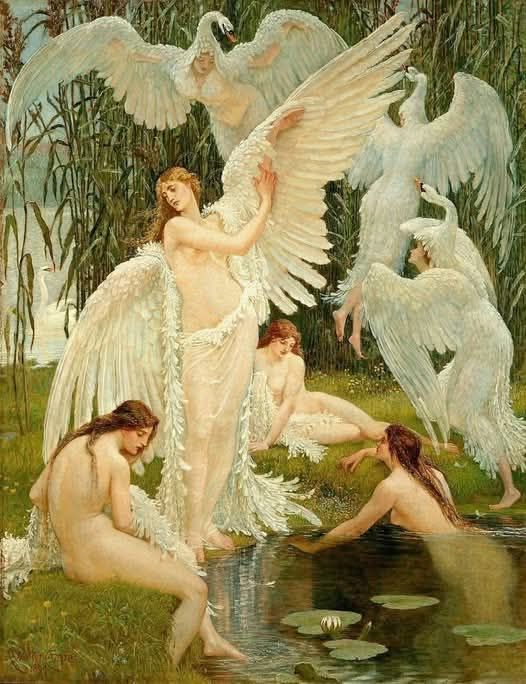
Seraphita: the poet’s white cat. Also the title of a Balzac novel he admired, set in Norway.

Translation: Copyright © Timothy Adès

More poems by THÉOPHILE GAUTIER...

Proposition to George Sand

Categories
French

Proposition to George Sand

ALFRED DE MUSSET (1810-57)

Quand je mets à vos pieds un éternel hommage Voulez-vous qu’un instant je me change de visage? Vous avez capturé les sentiments d’un cœur Que, pour vous adorer, forma le Créateur. Je vous chéris, Amour, et ma plume en délire Couche sur le papier ce que je n’ose vous dire... Avec soin, de mes vers, lisez les premiers mots Vous saurez quel remède apporter à mes maux. Elle répond : Cette insigne faveur, que notre cœur réclame, Nuit à ma renommée et répugne à mon âme.
Proposition to George Sand
When I lay deathless homage at your feet, Will you desire my face to change one whit? You have enthralled this heart, which powers above Have formed to love you, and that you may love Me in return, my dear one! Can my pen Lie, writing what my lips dare not say plain? With care, peruse the leading words I send: You shall discover how my woes may end. Her Reply: This signal favour shames and gives offence. Night yields to day: my loving heart consents!

Translation: Copyright © Timothy Adès

More poems by ALFRED DE MUSSET...